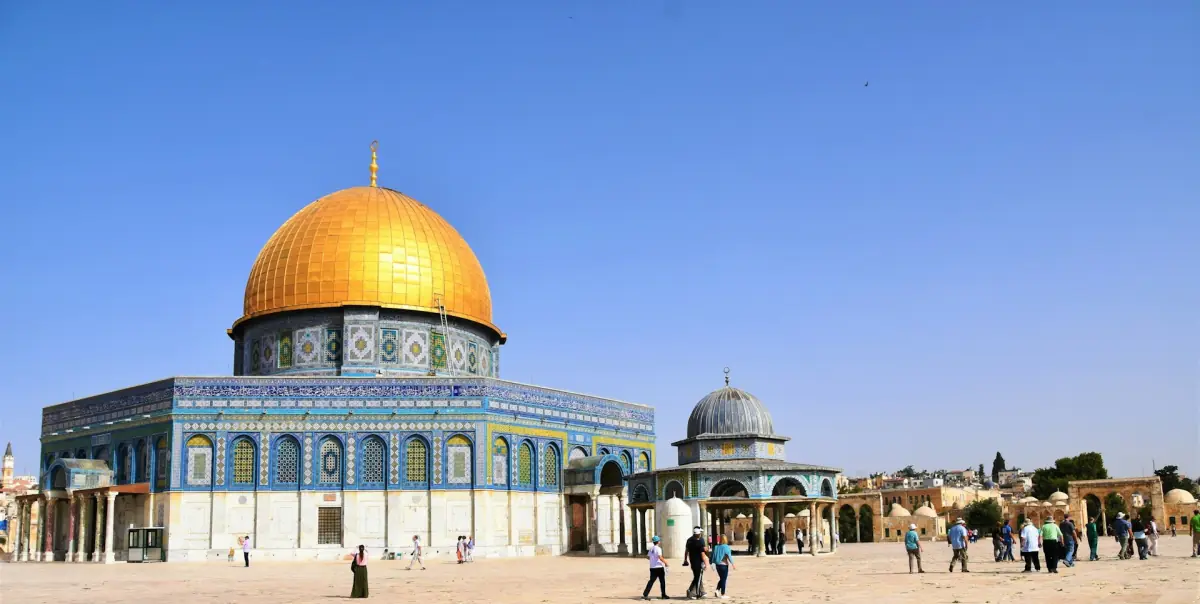
The Dome of the Rock and its setting
The Dome of the Rock is one of the landmarks named in UNESCO’s description of Jerusalem’s Old City, alongside the Western Wall and Holy Sepulchre. It stands on the plateau known as the Temple Mount / Haram al-Sharif. For visitors, the key distinction is between recognising the building in a city view, visiting the surrounding open area and entering a religious building.
These are different experiences, not alternative names for one admission. An itinerary mentioning the Dome of the Rock may concern its exterior or a view towards it. Plan the wider Old City day around the places that matter most to you, leaving room to adapt the plateau element to the access arrangements for your date.

Temple Mount and Haram al-Sharif
Both names appear in visitor information for the plateau. Jerusalem’s Old City has religious significance for Judaism, Christianity and Islam, and this guide uses place names for orientation rather than political interpretation. The Dome of the Rock and Al-Aqsa Mosque should also be distinguished from each other, as well as from the open area around the buildings.
Choose what you want to understand before choosing a route. A skyline view helps place the golden dome among the walls and roofs. A visit to the plateau concerns the setting around the buildings. An interior visit is a separate access question, so neither a city-tour title nor admission to the open area should be treated as a promise of entry inside.
Jerusalem day trip from Tel Aviv
This guided trip includes return transport from Tel Aviv; Temple Mount access depends on availability, with a viewpoint as the alternative.
Hand-picked tours, booked through GetYourGuide. Prices are indicative starting prices in US dollars (as of November 2026). Tap a tour for live availability and the current price in your currency.

An Old City day trip from Tel Aviv
A guided excursion includes return transport from Tel Aviv, with a conditional Temple Mount visit or an alternative viewpoint; it is a city tour rather than an admission ticket.
Checking access without building the day around a promise
Check the arrangements issued by the responsible authorities for your visit date before travelling to the site. In particular, obtain current instructions about admission, clothing, belongings and controls rather than following an undated timetable or an old walking map. Treat opening information for other Old City sites separately: proximity does not make their arrangements transferable.
A useful plan has an alternative focus within the Old City rather than a tightly timed sequence dependent on plateau access. The Old City walking guide explains the four quarters and the published route from Jaffa Gate. The Western Wall visitor guide covers the prayer plaza and its separate tunnel route. A tunnel reservation does not grant access to the plateau.
For the wider travel decision, read the dated travel-advice and arrival section. The guide’s references include the US Israel advisory of 23 October 2026 and West Bank advisory of 26 August 2026. These are travel-advice references, not an assessment by this website of individual entrances or permission to visit a particular religious site.
Buildings versus plateau on a guided excursion
The featured excursion leaves from HaRakevet Street 8 in Tel Aviv. It includes a guide and return transport from Tel Aviv; food and drinks are extra. It suits a traveller already based there who wants an Old City day, rather than someone seeking transport from the airport or pickup at a Jerusalem hotel.
The programme has a conditional Temple Mount element, with a viewpoint as the alternative when access is unavailable. That distinction is central to choosing the outing. Its value is the guided city visit and transport, not a guaranteed interior visit to the Dome of the Rock or Al-Aqsa. Compare the departure arrangements in the Jerusalem day trips from Tel Aviv guide.
Viewing from outside
An outside perspective can be an intentional part of a Jerusalem visit rather than merely a substitute for another stop. The Mount of Olives overview concerns views towards the Old City, its wall and the Dome of the Rock. Keep that separate from the practical question of reaching a particular path or viewpoint on your date.
For a more coherent day, decide whether the emphasis is the city’s religious geography, an Old City walk or an excursion from Tel Aviv. Then keep time for the other places you most want to understand. The nearby Holy Sepulchre belongs to a different religious tradition and has its own visiting arrangements, described in the church visitor guide.
Questions about the site
Are the Dome of the Rock and Temple Mount the same thing?
The Dome of the Rock is a building on the plateau known as the Temple Mount / Haram al-Sharif. A view of the building, a plateau visit and entry inside are distinct.
Does the day trip depart from Jerusalem?
The featured excursion departs from Tel Aviv at HaRakevet Street 8 and includes return transport from there. Use that start point when planning the day.
What happens if plateau access is unavailable?
The excursion provides a viewpoint alternative. Choose it for the guided Old City outing rather than for a promised interior visit to a mosque or the Dome of the Rock.