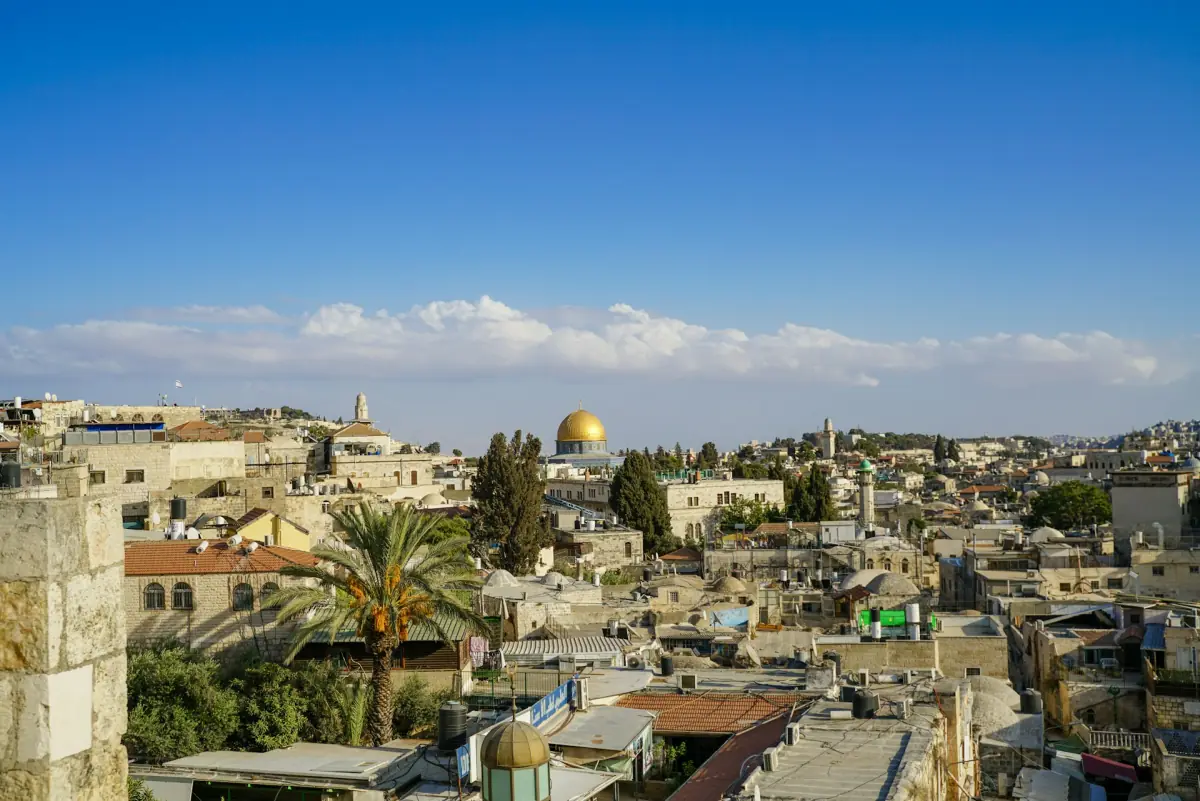
Choosing the best time to visit Jerusalem
The best time to visit Jerusalem for walking is a climate question as well as a calendar decision. April and May, together with October, are useful starting points for visitors seeking milder conditions than summer and less rain than winter. This is an interpretation of long-term climate normals, not a promise about the weather on a particular day or a recommendation overriding travel advice.
Start with the places that matter most. A route through the Old City, a visit to a prayer site and an outing to the Mount of Olives make different demands on the day. Choose the season around that preferred programme, then check worship arrangements, transport and current access separately. A pleasant forecast leaves those other questions to be addressed separately.

Spring and autumn walking conditions
April and May sit between the wetter winter pattern and the hotter summer pattern in the Jerusalem station record. October offers another comparatively mild walking window. For someone whose main interest is the Old City's quarters and sacred sites, these are sensible months to consider before adjusting for personal availability and the religious calendar.
Think in terms of the whole outing rather than a single comfortable hour. The walk from a meeting point, pauses outside a church and the return to the accommodation all belong in the plan. A lighter schedule leaves room to respond to the actual conditions instead of trying to complete every landmark on an inflexible list.
The underlying series is the NOAA/WMO record for station 40183, using the normal period 1991 to 2020 and the archive revision of 22 January 2025. For monthly temperatures and rainfall rather than a seasonal choice, see the Jerusalem weather table. Those historical values describe a pattern, not the conditions of the coming week.
An Old City walk
A guided walk from Jaffa Gate is an outdoor option to consider when planning the season of your visit.
Hand-picked tours, booked through Viator. Prices are indicative starting prices in US dollars (as of November 2026). Tap a tour for live availability and the current price in your currency.

Build the day around an Old City walk
A guided Old City walking tour starts outside Jaffa Gate and offers a focused way to explore on foot. Choose the date around your wider visit and the day's conditions.
Summer shade and winter rain
Summer calls for a more selective outdoor plan. Allow breaks, take water and consider how much time the route spends outside. The summer rainfall values in the climate record are very low, but rounded zeroes do not exclude rain. Check a current forecast close to the visit and pack for the conditions expected during the visit.
Winter has a wetter pattern and cooler conditions. Bring a waterproof outer layer and footwear suited to walking, and avoid making every part of the day depend on a long outdoor route. A church or museum visit can be a different focus from an extended walk, but its own visiting arrangements still need attention. The history guide explains the Tower of David museum separately from historical city tours.
Jerusalem in December
December belongs to the cooler, wetter part of the climate year. Plan clothing and outdoor time accordingly rather than treating it as a second spring. If the visit centres on Christian sites, identify the church and worship arrangements that matter to you, then leave flexibility around them. A seasonal atmosphere is not a promise of entry or a reason to assume a particular timetable.
Worship calendars and Shabbat
Jerusalem's sacred sites are places of worship, not simply stops on a weather-based itinerary. The Old City has Muslim, Christian, Jewish and Armenian quarters. Religious dates and observances should be considered alongside the season, with attention to the rules of the particular place being visited rather than a single rule for the whole city.
At the Western Wall, the visitor rules prohibit photography and the use of electronic devices on Shabbat and Jewish religious festivals. The railway also has a Shabbat interruption from Friday evening to Saturday evening. Plan arrival and the return connection with that in mind; the arrival and transport guide also contains dated official travel-advice references. Climate suitability is separate from that advice.
Mahane Yehuda needs its own timing decision. Friday market trading is shortened, while market stalls and later-opening cafés or bars should not be treated as one timetable. Read the market guide before placing a food visit into a Friday or evening plan.
Choosing a walking plan
A useful route begins with a clear meeting point and a limited set of priorities. The published tourism walk from Jaffa Gate links the David Street market, Muristan, the Church of the Holy Sepulchre, Cardo, Jewish Quarter and Western Wall before returning to the gate. Use that as geographical orientation, not a promise that every stop shares the same access conditions.
The guided Old City walk offered here starts by the stone bench outside Jaffa Gate and lasts four hours. Its included service is the guided tour. It suits a day centred on understanding the city on foot; it is not a seasonal access pass. Compare the wider Old City walking options when deciding between a shared route and a private guide.
Seasonal planning questions
Which months suit an Old City walking visit?
April, May and October are useful climate-based choices for milder walking conditions. They do not guarantee a particular forecast, site access or the suitability of travel under current official advice.
Is December a dry month?
December falls within the wetter winter pattern in the station record. Bring rain protection and plan outdoor time flexibly; use the weather page for the historical monthly figures.
Does choosing spring avoid Shabbat transport changes?
The season does not remove the weekly railway interruption from Friday evening to Saturday evening. Check the actual travel date and connect the airport journey with the accommodation plan.
Does the guided walk include access to every sacred site?
The included service is a guided Old City tour. Plan individual sacred-site visits around their own arrangements rather than treating the walking tour as a universal admission product.